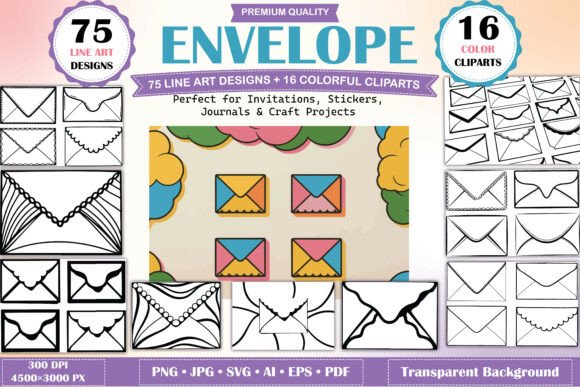
75 Line Art Designs 16 Color Cliparts Review
As a designer who has spent years turning digital files into tangible, stitched treasures, I approach every new asset with a mix of excitement and skepticism. The market is flooded with graphics, but not all of them translate well to the needle and thread. Today, I am putting 75 Line Art Designs 16 Color Cliparts through its paces to see if it truly belongs in your embroidery workflow or if it should remain just another file on your hard drive.
The first thing you notice about this collection is its versatility. While the product description highlights its use for stationery and invitations, my eyes immediately went to how these line art envelopes would look on fabric. In the world of machine embroidery design, simplicity is often the hardest thing to master. This bundle offers clean, distinct lines that suggest a modern, boutique aesthetic. It creates a mood of thoughtful craftsmanship, perfect for brands that value elegance over clutter.
From Screen to Stitch: A Real-World Scenario
Let's imagine a real project. You are an Etsy seller preparing for the holiday season. You need to create a custom embroidered tote bag for a client who runs a local bakery. They want something unique that screams "handmade" without looking like a generic mass-produced item. You decide to use 75 Line Art Designs 16 Color Cliparts as the centerpiece.
The challenge here is translating a flat line art envelope into a three-dimensional textile piece. When I tested similar assets, the risk was often that the lines became too thin to hold their shape during stitching, resulting in a muddy mess after the first wash. However, the structure of this clipart bundle suggests enough weight in the strokes to handle a satin stitch border effectively. Imagine the finished product: a sturdy canvas tote with a crisp, outlined envelope motif, perhaps filled with a subtle fill stitch to give it dimension. It transforms a simple bag into a personalized gift that feels expensive and curated.
This same logic applies to other high-demand items like aprons, baby onesies, or even embroidered patches for denim jackets. The clean lines of 75 Line Art Designs 16 Color Cliparts allow for creative color blocking. You could stitch the outline in black thread against a white background for a classic look, or use one of the 16 included colors to add a pop of vibrancy that matches a brand's palette. For a small shop owner, this level of customization is what drives customer trust and repeat business.
Where These Designs Shine
When evaluating an embroidery file for commercial use, we have to ask: does it add value? In my experience, 75 Line Art Designs 16 Color Cliparts excels in projects where clarity is key. It is ideal for:
- Custom Apparel: Sweatshirts and t-shirts benefit from the clean, graphic nature of line art. It doesn't overwhelm the garment like a dense floral pattern might.
- Baby Embroidery: For nursery decor or baby clothes, soft, rounded lines are essential. This collection offers a gentle visual appeal that works beautifully on cotton blends and muslin.
- Holiday Embroidery: Think of creating seasonal kitchen towels or pillow covers. The envelope theme can be adapted for wedding invitations, anniversary gifts, or even festive packaging designs.
- Digital Product Previews: If you sell printable mockups or digital design assets, having high-quality graphics like this allows you to showcase your work realistically before the customer buys.
The inclusion of 16 color options is a significant plus for designers working on commercial embroidery projects. It means you aren't stuck with a single monochrome option. You can match the thread colors to specific fabric textures, ensuring the final product looks cohesive. Whether you are creating a boutique branding kit or a set of matching guest towels for a wedding, the flexibility here supports professional presentation.
Handling the Technical Challenges
However, being an experienced reviewer means I must also point out where caution is required. Not every design fits every surface. When working with 75 Line Art Designs 16 Color Cliparts, there are specific scenarios where you need to tread carefully.
Small Hoop Sizes: If you are working on a cap or a tiny patch, the detail level needs to be scrutinized. Line art can sometimes lose definition when scaled down too far. Always test the design in your hoop software to ensure the stitches don't merge together. If the lines are too fine, they may require a smaller needle or a higher thread count, which increases the risk of puckering.
Fabric Texture and Stability: Stretchy fabrics like jersey or thin knits can distort fine line work. Without proper stabilizer support, the tension of the satin stitch or fill stitch can pull the fabric, warping the envelope shape. For textured fabrics like heavy denim or bouclé, the contrast might get lost. In these cases, you might need to adjust the thread colors or add a backing layer to ensure the design stands out.
Dense Stitch Areas: While line art is generally light, if you attempt to fill the interior of the envelope with dense stitching, you risk creating a stiff area that won't drape well on apparel. This is particularly important for items that will be frequently washed, such as aprons or tea towels. The structural integrity of the design must hold up to the agitation of a washing machine.
Practical Designer Notes for Success
Before you commit to using this collection in a client project, here is my checklist for success. First, always test the design on scrap fabric. This is non-negotiable. Check the stitch density and see how the threads interact with your chosen material. Does the running stitch look smooth, or does it skip? Is the applique design (if applicable) laying flat?
Review your thread colors against the fabric. High contrast is usually best for line art to maintain visibility. If you are using dark fabric, ensure the thread color is bright enough to pop. Also, inspect small details closely. Sometimes, what looks perfect on a screen can become illegible once stitched. Confirm whether the design works for both personal and commercial projects by checking the license terms provided by the creator.
Finally, consider the end-user experience. Will the finished product feel comfortable? If you are making a tote bag design or a sweatshirt embroidery piece, the stiffness of the embroidery should not hinder usability. Use a proper stabilizer to prevent puckering, and always run a black-and-white mockup test to check the composition before spending time on the actual production.
In conclusion, 75 Line Art Designs 16 Color Cliparts is a valuable addition to any designer's toolkit, provided you understand its limitations and strengths. It offers a clean, professional aesthetic that elevates handmade products and digital assets alike. By approaching it with a critical eye and following practical testing protocols, you can transform these digital illustrations into stunning, wearable art that your customers will love.