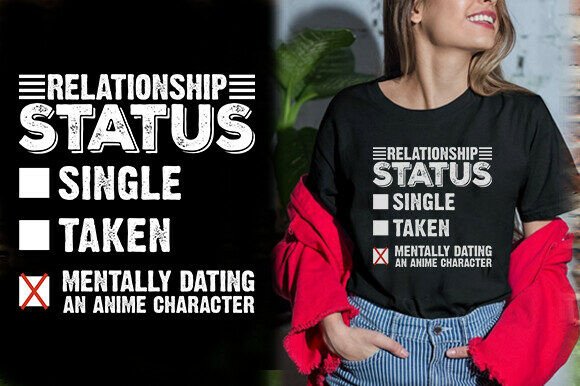
Review: Relationship Status Single Taken Mental Embroidery Design
As an embroidery designer who spends more time troubleshooting stitch errors than admiring finished products, I approach every new machine embroidery design with a healthy dose of skepticism. We have all seen the endless stream of "cute couple" graphics that look charming on a screen but turn into tangled messes once they hit the hoop. Today, I am evaluating a specific graphic asset titled RELATIONSHIP STATUS SINGLE TAKEN MENTAL. This piece falls under the category of T-Shirt Designs and is classified as a Graphics type file. While the description markets it heavily toward the "best couple t-shirt" and "matching couple shirts" niche for Print-on-Demand (POD) markets, my goal here is to strip away the marketing fluff and assess its viability for actual stitching.
First Impressions and Visual Personality
The phrase "Relationship Status: Single, Taken, Mental" plays on a popular internet meme format, blending romantic availability with a touch of chaotic humor. Visually, this kind of text-heavy design relies entirely on typography and layout hierarchy. When I first loaded the file into my digitizing software, my immediate concern was the balance between the three distinct states described in the text. Does it feel cluttered? Is the visual weight distributed evenly?
In practice, designs like this often suffer from being too busy. If the font choices clash or if the spacing is inconsistent, the design loses its punch. However, when executed well, this concept has high emotional resonance. It speaks directly to a demographic that appreciates wit over traditional romance. For an Etsy seller or a small shop product owner, this is valuable because it targets a specific buyer persona: someone who wants to express their relationship status without being overly sentimental. The mood is playful, slightly sarcastic, and very modern. It feels less like a generic gift and more like a statement piece, which can significantly boost buyer engagement on social media platforms where visual appeal drives sales.
Real-World Application: From Screen to Stitch
To truly understand the value of RELATIONSHIP STATUS SINGLE TAKEN MENTAL, we need to move beyond the digital preview and imagine it on physical goods. Let’s consider a real-life scenario: preparing a batch of custom embroidered tote bags for a local craft fair. Tote bags are a staple for craft business owners because they are low-cost items with high perceived value when personalized.
If I were to place this design on a canvas tote, the text needs to be legible from a distance. The humor lands better when the viewer can read the entire phrase quickly. A large placement on the front center of a tote bag would work well. Alternatively, this could serve as a great back-print style embroidery on a hoodie. Imagine a customer wearing a sweatshirt with this phrase centered on the chest. It becomes a conversation starter. For custom apparel, the versatility is key. It isn't limited to just one garment type.
I also see potential in smaller applications. An embroidered patch featuring this quote could be attached to a denim jacket or a backpack. This expands the utility of the embroidery project beyond just clothing. It allows the maker to offer design assets that can be adapted into accessories, increasing the range of handmade product offerings available to the end consumer. Furthermore, as a printable mockup for digital listings, this design helps visualize how the final finished product will look before any thread is cut, reducing return rates due to misaligned expectations.
Performance on Different Fabrics and Garments
The success of this design hinges on the substrate. Here is how it performs across various common materials:
- Sweatshirt Embroidery: This is likely the strongest use case. The thicker fabric provides stability, allowing for clean satin stitch outlines around letters if the design includes them. The texture of the fleece adds depth, making the thread colors pop.
- Tote Bag Design: Canvas is durable but can pucker if the stitch density is too high. This design should be tested to ensure the backing stabilizer doesn't show through the weave of the canvas.
- Baby Embroidery: While humorous for adults, using this on baby clothes requires careful consideration. The font must be soft enough not to irritate sensitive skin, and the design should avoid sharp corners or excessive bulk. It might be better suited for a parent's item rather than the infant's onesie.
- Caps and Hats: Curved surfaces present a challenge. If the text is long, it may distort on the curve of a baseball cap. A smaller, simplified version would work better here, perhaps focusing only on the "Mental" part of the phrase for a minimalist look.
Where Caution Is Required
No design is perfect, and RELATIONSHIP STATUS SINGLE TAKEN MENTAL has areas where a designer needs to exercise judgment. One major risk area is small hoop sizes. If you attempt to digitize or stitch this entire phrase in a 4x4 inch hoop, the letters will become cramped. Legibility suffers, and the machine may struggle with needle penetrations that are too close together, leading to thread breaks.
Another critical factor is fabric texture. On highly textured fabrics like heavy waffle knit or boucle wool, fine details can get lost. The eye cannot distinguish individual stitches, so the message gets muddied. Similarly, stretchy fabrics like jersey knits require a strong tear-away or wash-away stabilizer to prevent distortion. Without proper stabilization, the fill stitch areas can pull the fabric, warping the shape of the letters.
Dark fabrics also pose a contrast issue. If the original design uses light threads on a dark background, ensure the thread selection has enough sheen to reflect light. Matte threads can disappear against dark cottons. Always test your thread colors against the actual fabric swatch before committing to a full production run.
Practical Designer Notes for Execution
Before integrating this into your commercial workflow, follow these practical steps to ensure quality:
- Test on Scrap Fabric: Never go straight to the final product. Run the design on a scrap piece of the same material to check for puckering, tension issues, and color accuracy.
- Check Stitch Density: Review the stitch density in your software. If the design is too dense, it will feel stiff and uncomfortable. If it is too sparse, it may lack definition. Adjustments to underlay stitches might be necessary.
- Confirm Hoop Size: Ensure the design fits comfortably within your standard hoop sizes. If it is borderline, consider resizing or simplifying the layout.
- Inspect Small Details: Look closely at any decorative accents or tiny lettering. These are the first things to fail during high-speed stitching. Simplify if needed.
- Black and White Mockups: Convert the design to black and white in your editing software. This helps verify that the shapes hold up without relying on color contrast alone.
- Licensing Check: Since this is marketed for POD and commercial use, verify the license terms. Do you have the right to sell finished items? Can you sell the digital embroidery file itself? Clarity here protects your commercial embroidery business from legal issues.
Final Verdict
RELATIONSHIP STATUS SINGLE TAKEN MENTAL is a solid addition to a modern embroidery library. It taps into current cultural humor while offering flexibility across multiple product types. Its strength lies in its relatability and wit, which translates well to personalized gifts and holiday embroidery projects. However, it demands respect for technical execution. Proper stabilization, appropriate hoop sizing, and thoughtful fabric selection are non-negotiable for achieving a professional result.
For the creative entrepreneur looking to expand their catalog, this design offers a good balance of novelty and wearability. It is not just another generic love-themed graphic; it has personality. When stitched correctly, it delivers a finished product that customers will actually want to wear and showcase. Just remember to test thoroughly, manage your expectations regarding detail levels, and always prioritize the tactile experience of the wearer. In the world of handmade goods, that attention to detail is what builds trust and repeat business.